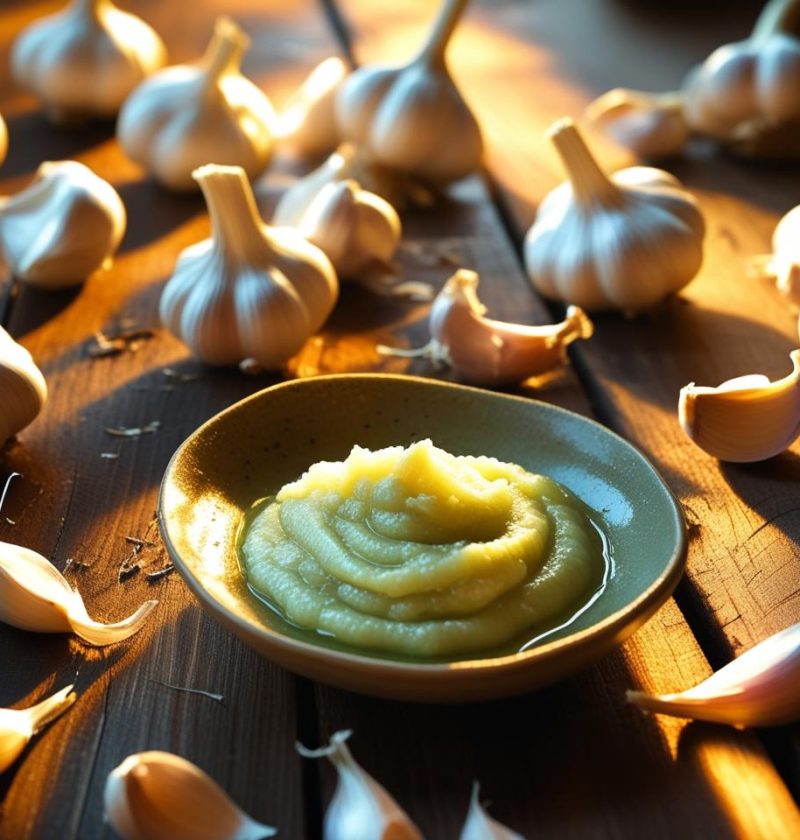
Add oil for smoothness: Oil not only helps create a silky paste but also prevents oxidation (discoloration).
Salt as a preservative: A pinch of salt extends the shelf life and enhances flavor.
Use a dry spoon: Always use a clean, dry spoon when scooping garlic paste to avoid contamination.
Freeze in cubes: Store in ice cube trays for ready-to-use portions — perfect for quick cooking.
Avoid over-blending: Blending too long can make garlic bitter due to the release of sulfur compounds.
Mix with ginger: For Indian and Asian cooking, combine equal parts garlic and ginger to make a ginger-garlic paste — a staple in countless recipes.
Garlic Paste vs. Fresh Garlic vs. Ginger-Garlic Paste
| Type | How It’s Made | Flavor | Best Used For |
|---|---|---|---|
| Garlic Paste | Peeled garlic blended with oil/salt | Bold, pungent, smooth | Curries, stir-fries, marinades |
| Fresh Garlic | Chopped, sliced, or minced garlic cloves | Strong, slightly sharp | Quick sautés, salads, toppings |
| Ginger-Garlic Paste | Equal parts ginger & garlic blended | Balanced, aromatic | Indian curries, Asian dishes, marinades |
👉 Quick tip:
Use garlic paste when you want smoothness and convenience.
Use fresh garlic for crunch and sharper flavor.
Use ginger-garlic paste for deeper, spiced dishes.
How to Use Garlic Paste
- Curries & Gravies: Sauté garlic paste in oil or ghee as the flavor base.
- Marinades: Mix with yogurt, lemon juice, and spices for meat or vegetable marinades.
- Stir-Fries: Add a spoonful to hot oil before tossing in vegetables or noodles.
- Rice & Pasta: Stir into fried rice, biryani, or pasta sauces.
- Soups & Stews: Blend in for rich, bold flavor.